Symposium organizers
welcome papers related to accomplishing human-like intelligence by
artificial systems. In many research domains the existing
state-of-the-art AI/CI solutions significantly differ from the human
competence level. Even though it is generally not clear whether
human-like approach would show its upper-hand over existing methods,
the exploration of this research path seems to be advantageous and
challenging.
The manuscripts should be submitted in PDF format. Click Here to know further guidelines for submission.
The main goal of this symposium is to promote and advance research activities related to all facets of human-like intelligence. The organizers encourage submission of the papers describing application of various Computational Intelligence paradigms including neural networks, genetic/memetic computing, fuzzy logic, machine learning, and statistical methods to human-like intelligent behavior and problem solving. Topics
Topics of interest include
but are not limited to:
 Models and architectures for human-like intelligence
 - Cognitively-plausible architectures and systems
- Biologically-inspired cognitive models
- Problem solving based on intuition, creativity, insight,
curiosity and imagination
- Chunk-based representations and the use of geometrical
properties in problem solving
- Hierarchical knowledge representation
- Emergent intuitive behavior and creativity in complex
systems
- The guiding role of emotions and motivation in discovery
- Machine consciousness
- Autonomous learning, active learning
- Lifelong learning, transfer learning and multitask learning
- Theory or application of structured learning and structured
intelligent systems
- Ambient intelligence
- Recent developments in artificial art
- Human-like intelligent systems in manufacturing, security,
game playing, planning and scheduling
Symposium Co-Chairs
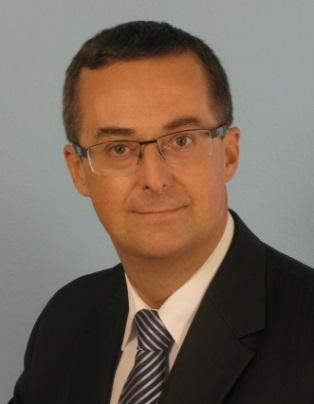
Jacek Mańdziuk
Jacek Mańdziuk
Warsaw University of Technology, Poland
Email: [email protected]

Włodzisław Duch
Nicolaus Copernicus University, Poland
Email: [email protected]
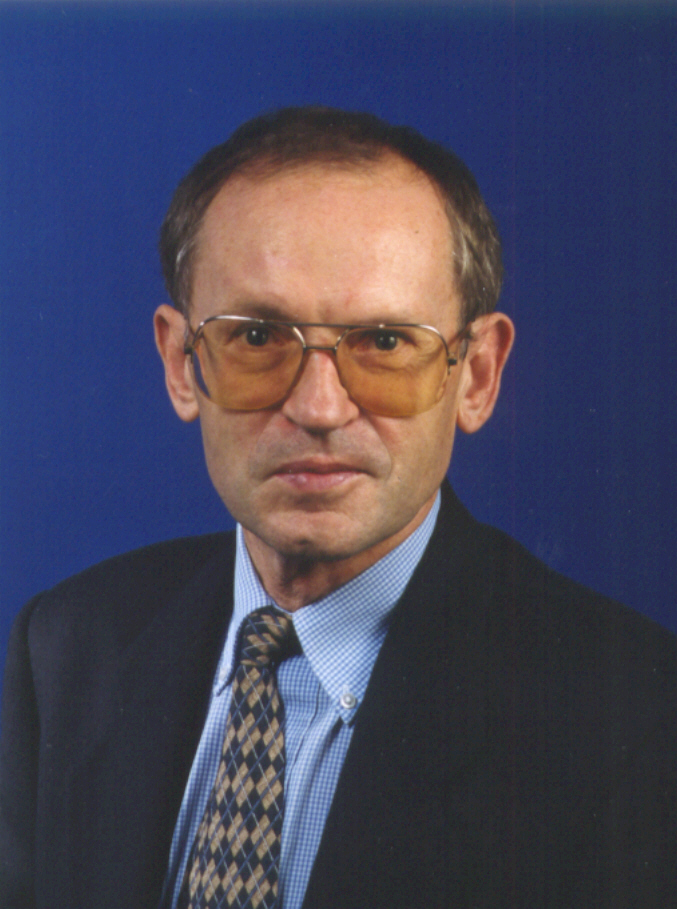
Janusz Starzyk
Ohio University, USA
Email: [email protected]
Program Committee (Tentative)
| Hussein Abbass | University of New South Wales, Australia | |
| ItamarArel | University of Tennessee, USA | |
| Peter Boltuc | University of Illinois at Springfield, USA | |
| Vadim Bulitko | University of Alberta, Canada | |
| Sung Bae Cho | Yonsei University, Korea | |
| ErMengJoo– Nanyang Technological University, Singapore | ||
| David B. Fogel | Natural Selection, Inc., USA | |
| Stan Franklin | University of Memphis, USA | |
| Ben Goertzel | Novamente LLC, USA | |
| Min Jiang– Xiamen University, China | ||
| Janusz Kacprzy k | Polish Academy of Science, Poland | |
| Kyung | Joong Kim | Sejong University, Korea |
| Luis C. Lamb | Federal University of Rio Grande do Sul, Brazil | |
| Giuseppe Lo Re | University of Palermo, Italy | |
| Yew Soon Ong | Nanyang Technological University, Singapore | |
| Giovanni Pilato | Institute for High Performance Computing and Networking ICAR, Italy | |
| Michał Ptaszyński | Hokkai | Gakuen University, Japan |
| Paweł Raif | Silesian University of Technology, Poland | |
| Leszek Rutkowski | Częstochowa University of Technology, Poland | |
| Juergen Schmidhuber | Univesity of Lugano, Switzerland | |
| J. Ignacio Serano | Spanish National Research Council (CSIC), Spain | |
| Rossi Setchi | Cardiff University, UK | |
| HavaSiegelmann | University of Massachusetts, USA | |
| MaciejSwiechowski | Polish Academy of Sciences, Poland | |
| Ah | Hwee Tan | Nanyang Technological University, Singapore |
| Kay Chen Tan | National University of Singapore, Singapore | |
| Ruck Thawonmas– Ritsumeikan University, Japan | ||
| Lipo Wang | Nanyang Technological University, Singapore | |
| PeiWang | Temple University, USA | |
| RoseliWedemann | State University of Rio de Janeiro, Brazil | |
| Marcin Wozniak | Silesian University of Technology, Poland | |
| Jacek M.Zurada | University of Louisville, KY, USA |